

The Majura Pines Recreation Area is a small 80 hectare forest on the outskirts of Canberra. It contains approximately 25km of mountain bike trails and a small dirt jump park.
The majority of the trails are volunteer built and maintained. The exceptions are the 4 flow trails that were constructed in 2015 by a professional contractor. These trails have since had some professional maintenance, in addition to volunteer maintenance. The construction and maintenance of these trails has cost approximately $300,000, paid for by the ACT government and from donations.
All other trail work has been undertaken by the Majura Pines Trail Alliance, who contribute over 2,000 volunteer hours each year. We are supported by the ACT Parks and Conservation Services ParkCare1 scheme which provides some hand tools and materials and ranger support. Parks and Conservation Services rangers also provide ad hoc chain-sawing and maintain the drinking tap and toilet.
The range of benefits, described below, show that this volunteer managed network of trails generates a total economic benefit in excess of $4.1 million per year.
The benefits described are only for mountain bikers. The Majura Pines Recreation Area is also popular with walkers, trail runners and horse riders, each with similar social and health benefits.
Participation
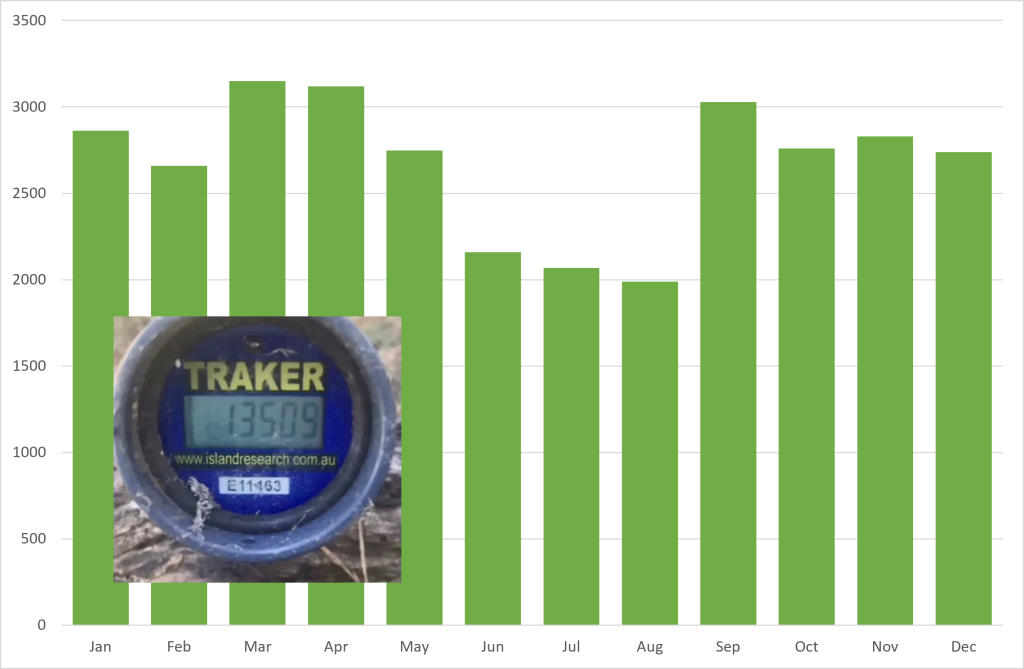
Trail usage was calculated using TRAKER-COUNT trail counters2 placed on popular trails over long period of times, combined with trail usage patterns established from TrailForks3 ridelogs. In 2022 there were 32,110 mountain bike rides on the Majura Pines trails to the west of the Majura Parkway.
No attempt has been made to calculate the trail usage on the beginner trails, pump track and dirt jumps (Majurassic Park) to the east of the Majura Parkway due to the irregular, non-linear nature of these trails. This area is very popular with families and dirt jumpers and is very busy at weekends. Therefore the trail usage is a significant under-estimation.
Again, using TrailForks ridelogs, it was calculated that the average ride length at Majura Pines is 14.1 km, and the total distance ridden in 2022 452,751km.
From detailed data obtained from the Strava API4 in 2016, 23% of riders at Majura Pines came from outside of the ACT5.
Social and Health Values
Mountain biking is a sociable, physical activity which is undertaken in a natural environment. This has a wide range of social, physical and mental health advantages.
The table below calculates the annual economic benefit of the Majura Pines mountain bike trails for a variety of social and health factors. These factors have been collated by the AusCycling study “Mountain Biking in Australia: An Economic and Participation Analysis”6.
The total benefit due to social and health values in 2022 was $1,898,304.44.
| Social Benefit | Summary of Benefit | Estimated Benefit per ride/km | Annual Benefit at Majura Pines |
|---|---|---|---|
| Health benefits | The personal and health system benefits due to healthier, active individuals | $1.58 per km ridden | $715,235.19 |
| Productivity benefit | Improved workplace productivity through decreased absenteeism and presenteeism | $7.59 per ride | $243,676.95 |
| Human capital uplift | Positive association between sport and physical recreation and educational outcomes | $2.50 per ride | $80,262.50 |
| Consumer surplus | The satisfaction people derive from participating in sport and active recreation | $25.98 per ride | $834,087.90 |
| Criminal and social justice benefit | Benefits from decreased crime rates due to increased engagement from sport and recreation | $0.78 per ride | $25,041.90 |
| TOTAL | $1,898,304.44 |
Volunteering
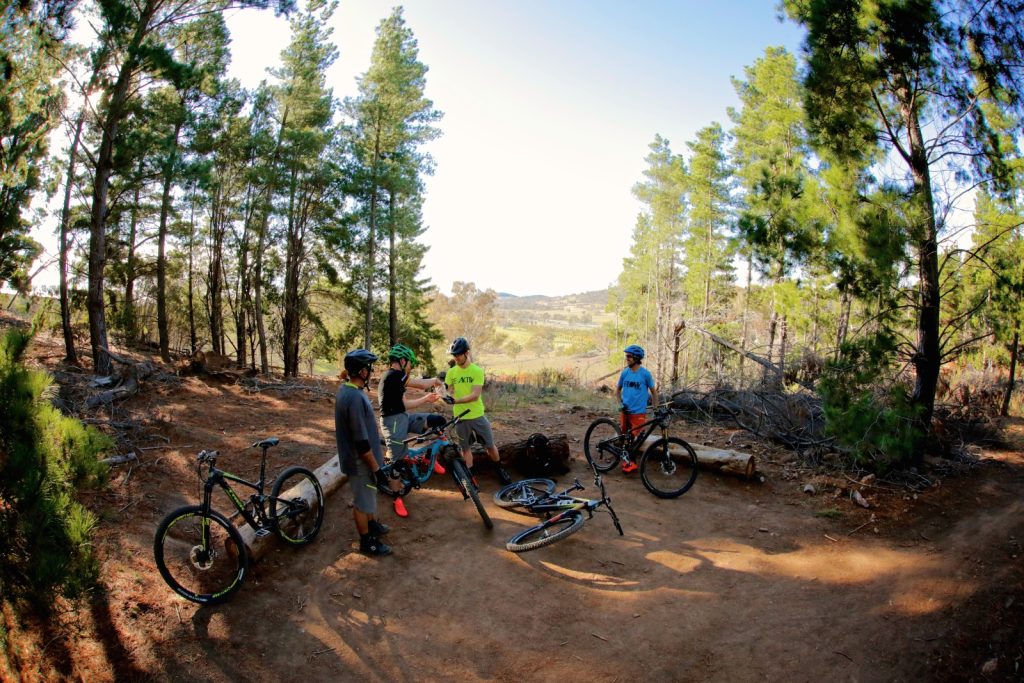
Volunteering in the sport and active recreation sector is estimated to add $6,327 million to the Australian economy6. Majura Pines Trail Alliance is a 100% volunteer organised and run group. Annually approximately 150 volunteers contribute a total of over 2000 hours of work.
The Centre for Volunteering (peak body for volunteering in NSW) provide a tool for calculating the value of volunteers7. In 2022 143 volunteers contributed 2,193 hours with a benefit of $105,701.00.
Tourism
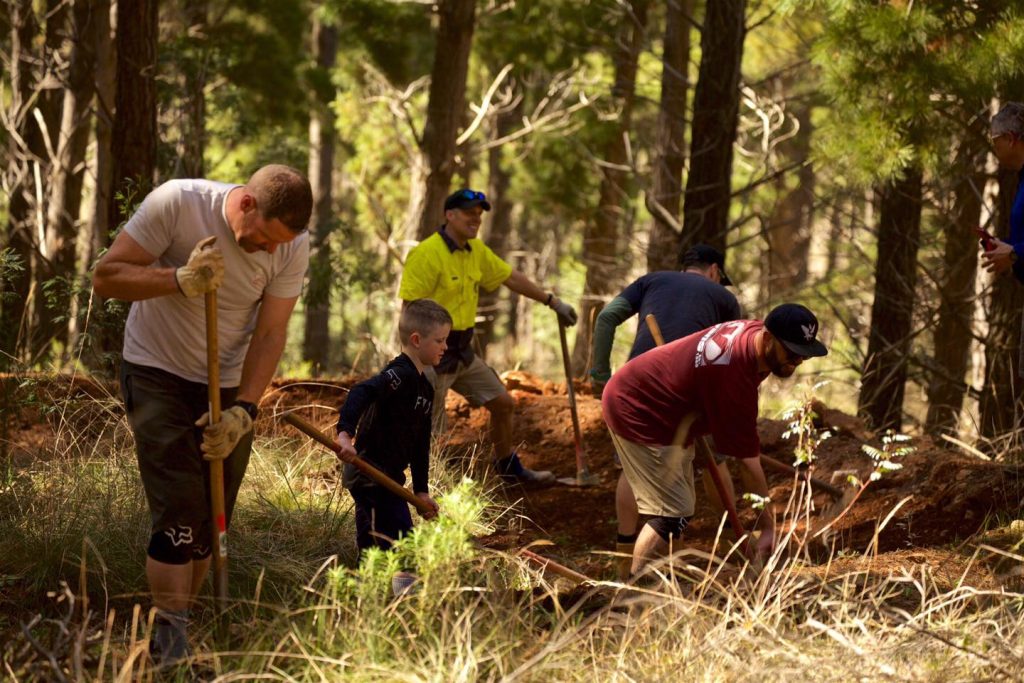
The Canberra Mountain Bike Report8 estimated that overnight domestic mountain bikers spend around $30 million each year while staying in the ACT. This value is based on March 2019 visitation figures. AusPlay9 data shows that from 2019 to 2022 there has been an 80% increase in participation in mountain biking in Australia. It is not unreasonable to assume that there has been also been a related increase in visiting mountain bikers to the ACT. If, conservatively, it is assumed that the tourism spend has only increased by half of the participation increase, the total 2022 mountain bike tourism spend in the ACT would have been $42 million. This is inline with the global and regional growth rates of the cycle tourism market10.
Whilst Stromlo Forest Park11 is clearly the largest mountain biking drawcard in the ACT, the Majura Pines trails are a significant part of the region’s appeal. Very conservatively, it is estimated that Majura Pines only contributes 5% of the ACT tourism “package”. This would give the 2022 tourism mountain bike spend attributed to the Majura Pines as $2.1 million.
Canberra Population Growth and Property Prices
The ACT is on track to become the fastest-growing state or territory by 2026/2712. Population growth allows for the expansion of labor and products which then grows the economy. Much of the appeal of moving to the “bush capital” is the lifestyle which offers accessible outdoor and natural spaces, sport and recreational facilities and an extensive network of cycleways and footpaths13.
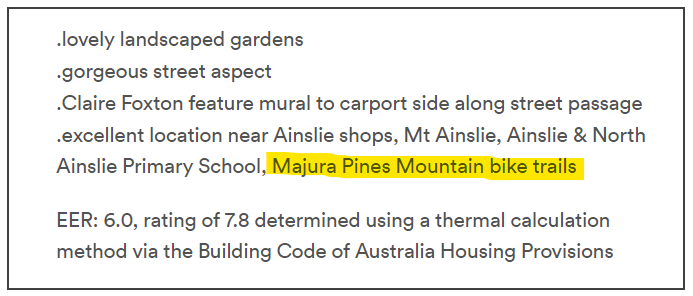
For those who lucky enough to live near to Majura Pines these doorstep trails are a large appeal. Real estate agents list the mountain bike trails as a local benefit14. People move to Canberra for the cycling and they move to the inner north to be near to Majura, just as they move to the Molonglo Valley to be near to Stromlo Forest Park.
We do not know of any way of quantifying the economic benefit that the Majura Pines has on the growth of the ACT economy and the property market but it is clearly a factor. If you know of way of evaluating this effect, or can help or correct any of our other calculations, then please send an email to majurapinestrails@gmail.com.
Report Download
Please feel free to use this report or any of the data calculated when in advocacy discussions. We would love to see similar calculations undertaken for other trail networks regions. Click the button below to download a PDF document version.
Links and References
- ACT Parks and Conservation Services ParkCare
- TRAKER-COUNT
- TrailForks Maura Pines Trail Usage Statistics
- Strava API
- Majura Pines Trail Usage, 2016
- Mountain Biking in Australia: An Economic and Participation Analysis, AusCycling, 9 March 2021
- Centre for Volunteering, Cost of Volunteering Calculator
- Canberra Mountain Bike Report, TRC Tourism, 2021
- AusPlay Data Portal
- Cycle Tourism Market Size, Share & Trends Analysis Report
- Stromlo Forest Park
- ACT budget shows population, economy are set for growth, Canberra Times, 22 June 2023
- Moving to Canberra, canberra.com.au
- Example Property Listing, Homes By Holly